- Mob No: +91-9662596651
- Email: info@gmail.com
- Address: Rajkot, Gujarat

Inline Drum Magnetic Separator
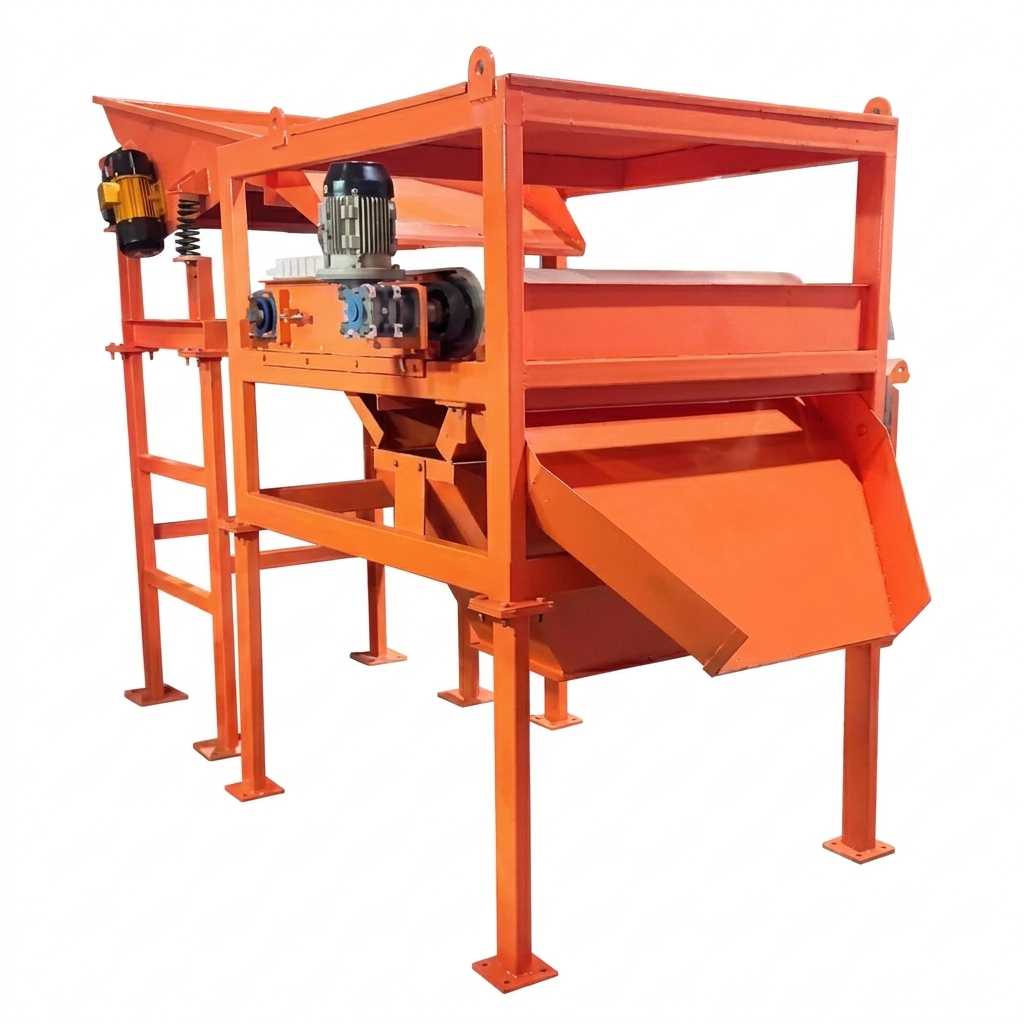
The principle of the Stainless Steel Separator relies on the unique paramagnetic behavior of certain stainless steel grades when exposed to a super-intensity magnetic field. Although stainless steel is normally considered non-magnetic, the powerful rare-earth magnetic roller creates enough magnetic force to temporarily attract and separate stainless steel particles from mixed material streams where conventional magnets cannot perform.
With the ability to separate particles as small as 2–3 mm, this technology has become an important advancement for recycling plants and material recovery facilities. As the demand for resource efficiency increases, stainless steel separators help improve purity levels, increase recovery value, and reduce contamination during downstream processes.
Today, stainless steel separators are widely used in applications such as ASR, MSW, E-waste, Zorba, Zurik, and metal scrap processing. Their precision and high-recovery performance make them essential in modern recycling lines, especially where maximizing material value and reducing manual sorting are priorities.
One of the most significant benefits of this technology is its role in environmental sustainability. By efficiently recovering stainless steel from municipal and industrial waste, the system helps reduce landfill waste, support circular resource use, and return valuable metals back into manufacturing.
How Stainless Steel Separator Works
In a stainless steel separator, a conveyor belt transports mixed material toward a high-intensity magnetic roller installed at the discharge point. Although stainless steel is typically non-magnetic, certain grades become paramagnetic when exposed to a concentrated magnetic field. As the material flows across the roller, non-magnetic items simply follow their natural trajectory and fall away, while stainless steel particles are temporarily attracted and held against the belt surface by the magnetic force.
As the belt continues rotating and the magnetic field weakens, the captured stainless steel is released and directed over an adjustable splitter plate into a separate discharge stream. This controlled process ensures accurate stainless steel recovery — even for small particle sizes — making the system ideal for high-volume recycling applications where precision, efficiency, and reduced manual sorting are essential.
Functions:
The stainless steel separator operates by utilizing the paramagnetic behavior of certain stainless steel grades when exposed to an intense magnetic field. As the material stream passes over the high-intensity magnetic roller, the stainless steel particles experience a temporary magnetic attraction, allowing them to be retained on the belt surface while non-magnetic materials continue their normal path. Once the magnetic influence decreases, the stainless steel is released and diverted into a separate discharge line, enabling precise and efficient recovery from mixed waste streams.
- Key Features:
- High-intensity super magnetic roller
- Advanced paramagnetic stainless steel recovery
- Robust design for continuous operation
- Long magnetic lifespan with zero maintenance magnets
- Adjustable splitter and belt speed for higher accuracy
- Heavy-duty build for industrial recycling environments
- Applications:
- Zorba & Zurik Separation
- Aluminum Scrap Recycling
- E-Waste & MSW Plants
- ASR (Auto Shredder Residue)
- Glass Cullet Separation
- General Metal Scrap Recovery
The Stainless Steel Separator is suitable for multiple recycling industries, including:
Why Choose Gravity Magnetics Magnetics Pvt. Ltd.?
With decades of innovation in magnetic separation technology, we provide reliable, high-performance, and durable systems trusted across global recycling and industrial sectors.